Showing posts with label Dead White Males. Show all posts

Sunday, March 05, 2017

MOON EXPLORATION THROUGH THE VAN MONCKHOVEN TELESCOPE.

One week ago, my best friend organized a stargazing evening in Lovendegem, a small locality in the north of the province of East Flanders. While there - and checking out Sirius, Orion and the Andromeda Nebula - some chap mentioned something about an old, impressive telescope still in use at the University of Ghent's Volkssterrenwacht Armand Pien, the so-called Van Monckhoven Telescope.

My interest thus aroused, and knowing that on Friday 3 and Saturday 4 March there were open door events at observatories all over Flanders, I decided to check out that telescope myself. It turned out that Volkssterrenwacht Armand Pien operated its observatory on top of a university building smack in the middle of Ghent (no ideal situation, light pollution being a serious issue and all). If you follow this link, you see that particular cupola housing the Van Monckhoven telescope.

I got there on Friday evening at almost 10pm.

Boy I was not to be disappointed:


 photo VM2_zpsj4glovbj.jpg


 photo VM1_zpsansvbn33.jpg


WOW. I said 'WOW'! What a discovery! The Van Monckhoven telescope turned out to be a refracting telescope manufactured around 1880 by a York, UK based company with a fascinating history, T.Cooke & Sons.


 photo VM3_zpsstd1mhae.jpg


A refracting telescope, or in short refractor, uses a lens as its objective to form an image. The image you see is inverted, so north becomes south and vice versa. The magnification is calculated by dividing the focal length of the objective lens by that of the eyepiece. The Van Monckhoven telescope allowed for changing the objectives, so that different magnifications could be obtained. When I was there, the particular magnification was 63.

Unfortunately, the sky overhead turned out to be very cloudy. Only towards the horizon there was no cloud deck, although there were fast-moving chasing clouds. The Moon was low however, the observatory's chief pointed the telescope to our nearest neighbor. And this is what I saw:


 photo Moon1_zpstvw6gnue.jpg


Mag-ni-fi-cent! And what a privilege to glimpse my best view of the Moon evah through a historical apparatus like this one!


 photo Moon2_zpsdaunnch4.jpg


The lunar phase being a waxing crescent, I could see perhaps 30 per cent of the right side, with the segment tilted to the right of course (in the northern hemispere, waxing crescent means the right side moonlit between 1 and 49 per cent). Keep in mind that with my naked eye, the sunlit segment was at the bottom right, but the Van Monckhoven being a refractor, what you saw through the device became inversed, so that same segment was visible on top and to the left.


 photo Moon_Map_zpsvdghkz69.jpg


All in all there were not too many details too discern, but what struck me most of all were two craters so close to another that their rims at the point of contact became as one (I marked them with a green "X"), plus darker areas above and to the left. I decided to check them out when I got home.

I couldn't find any decent Moon map on the net (but then I didn't search for too long), so I photographed the south pole of a decent map in "De Maan. Mysterie, Natuur en Exploratie", a decent Tirion Natuur book I bought in 2010. I inverted the image so that I could more easily compare it to my photos - which is why the characters you see are inverted, of course.

It did not take me long to identify the Moon features I could see: very quickly it was established that the two craters were Theophilus (on my photo, the one to the left) and Cyrillus (the one to the right). They were named after Theophilus of Alexandria and Cyrillus of Alexandria (later Saint Cyril), 4th-century Coptic Popes. Keep in mind that the Moon is bigger than you think, since both craters have a diameter of around 100 kilometers! Check out a fantastic shot of Theophilus in this Lunar Orbiter 3 photograph, taken in 1967.

The dark areas on the Moon are volcanic lava plains and called mares (seas), as I'm sure you know, and once I was certain of the identity of the two craters, it was clear that the mare just above Theophilus ('above' in my photo at least, in reality that night it was to the southeast) was Mare Nectaris, the "Sea of Nectar".

It followed that the mare to the left of Mare Nectaris, (Sea of Fertility) but separated from it by a lighter area, was the Mare Fecunditatis, an 840-klom in diameter crater which has the distinction of being the area from where the first automated rock samples took place, by the Luna 16 probe in 1970. (on my map, it's the red cross marked Loena 16). Oh those Russians! How I admire their engineering prowess! Too bad their talents didn't lead to full fruition because of the communist system.

Somewhat more to the left (on the photos) another mare follows, Mare Crisium (Sea of Crises). It is also separated from the previous one by a lighter area, so that the three mares, Crisium, Fecunditatis and Nectaris, appear as three dark, comparable spots forming a slightly bent arc. Of interest is that Mare Crisium is the landing are of three other Luna probes, and has also the small crater Picard in it, named after Jean-Luc Picard, the Enterprise Commander of the second Star Trek series (at least if you were processed by the Chicago Public Schools system).

But then, if we gaze to the right from Mare Crisium, after hopping over a diamond-shaped plateau named Palus Somni, we arrive at what is probably the sole Moon mare of which the name may ring a bell with everyone, even common core products: Mare Tranquillitatis!

Mare Tranquillitatis, or Sea of Tranquility (we call it the Zee der Stilte, or Sea of Silence, in that coarse peasant's language you know), will forever be remembered as the place where Apollo 11's Eagle touched down and Man, in the person of Neil Armstrong, set first foot on another celestial body. The landing spot at 0.8° N, 23.5° E has been named Statio Tranquillitatis because Armstrong, upon touching down, radioed the flight controllers on Earth: "Houston, Tranquility Base here. The Eagle has landed."

Van Monckhoven's telescope was far too weak too discern any human artefacts left on the Moon. No Earth-based telescope can do that... not even the Hubble Space Telescope. But at least this 137-year old magnificent apparatus allowed yours truly to see for the first time, with my own eyes, the landing area where the first humans to visit the Moon came down.

And for that, and for the fact that our readers can do so too via this here humble blog...

... I am very grateful.


 photo van_monckhoven_zpsydcgd7gh.jpgFinally, who was Van Monckhoven? He was a Belgian chemist, physicist, inventor, author and photographic researcher, born Désiré Charles Emanuel van Monckhoven in 1834. Extremely talented, he wrote a book on chemistry when he was 16 (!). Two years later, another book, "Elements of Physics" appeared. From this period dates also his interest in photography, and after high school he began working for Charles D'Hoy, an early photographer. In 1855 already, he published 'Traite de photographie sur Collodion' in Paris, followed by 'Traite general de photographie' in 1856, which became a standard work. In 1857 he started studying physics at the University of Ghent, to become Doctor in Physics in 1862. In 1866 he moved to Vienna, where together with a certain E. Rabending he operated a successful photo studio. When Van Monckhoven returned to Ghent in 1870, his name was made, not least because he had written several of the earliest books on photography and photographic optics. His original French works (remember that at the time, although Ghent was a city in Flanders, Flemish was considered a coarse peasant language) were later translated to English and even other languages, so that he became known throughout Europe. Van Monckhoven also invented or developed an enlarger (1864), a dry collodion process (1871), and improvements of the carbon print process (1875–80), and of silver-bromide gelatine emulsions.

I suspect that his intense interest in photography led to his procuring the telescope which would in time be named after him, but here the mystery starts, for I haven't been able yet to check out how the apparatus came to be such a prominent part of the Armand Pien Observatory. What I did learn was that for a very long time it was forgotten after Van Monckhoven's death in 1882, that it was found in a crate in the early nineties (of the LAST century, to be sure!) and that subsequently it was painstakingly restored, and installed under the observatory's main dome in around 1996. To ensure stability, it was bolted on a concrete column some thirty meters high.

If you happen to be in Ghent on the appropriate moment (generally Wednesday evenings), you have the chance to check out Van Monckhoven's famous telescope for yourself.

And if you now feel a sudden keenness to take up astronomy, download Stellarium. You will not regret it - I guarantee!


MFBB.


Monday, October 27, 2014

MONDAY NIGHT ART SNACK: JOHN EVERETT MILLAIS.

As per usual not much time left, gotta go to sleep, below three works by John Everett Millais. The first one is Chill October.


 photo millais_chill_october_zps2de6c56c.jpg


Life can be a wonderful kaleidoscope of experiences and impressions - if you are willing to give fate, coincidence, providence, whatever, if you are willing to give all that a hand. If you prefer to spend your holidays sitting on your butt on some f*cking Costa del Sol beach your chances of encountering something new, tintillating stuff are somewhat limited. Though granted, you've got more chance to come across bikinis.

Two years ago we spent part of our holiday in the Lake District. In Coniston, to be precise, nestled cosily between the western shore of Coniston Water and the Old Man of Coniston, 803m high. Beautiful place btw. We rented a cottage higher up in the village, so that we had a nice view over Coniston but one over the lake as well. As it happened we could spot a remarkable country house across Coniston Water. It happened to be Brantwood, final residence of the famous Victorian art critic John Ruskin.

God, so little time left.

Anyway, Ruskin did much to launch a new art movement which principally manifested itself in paintings, the Pre-Raphaelites. The foremost individual among them was John Everett Millais. Ruskin asked Millais to accompany him and his wife Effie, née Gray, to Scotland to make a painting of him - it's the one at the bottom. Millais did several sketches and paintings of Effie, and of course they fell in love with each other. The romance was helped in no small part by the fact that John and Effie's marriage was an unlucky one - after six years as man and woman, she was still a virgin.


 photo Millais_autumn_leaves_zpseb0f5d89.jpg


Anyway, Effie left Ruskin and was soon married to the artist. Ruskin would go on to become the foremost art critic of the Victorian Era and a distinguished Professor at Slade. She would become Millais's foremost champion and muse. Devoted to the young painter, she would eventually give him eight children. John Everett was warmly welcomed in the Gray family as well, and one of Effie's sisters in particular, Sophy Gray, features prominently in several of Millais' paintings. In the one above, Autumn Leaves, she's the tallest girl in black. There's a lot to be said and interpreted about this wonderful work, but like I said, no time remember?


 photo millais_ruskin_zps919a001d.jpg


And here's Millais' famous painting of Ruskin himself.

Check out the story of these people - there's a lot to be discovered and you won't be disappointed.

Nite. And remember the Dead White Males.


MFBB.

Saturday, October 25, 2014

RECOMMENDED READS: "THE LEFT AND THE DISTORTION OF HISTORY" BY JOHN L. HANCOCK.

John Hancock has a great piece over at American Thinker:


"In the fall of 1991, the relatively small and quiet university of Alfred University in New York State was engrossed in controversy. Indignant professors led students in protests, heated debates raged throughout the divided campus, editorials filled the school and local papers. At the heart of the controversy was the newly-installed statue of King Alfred, the medieval English monarch after whom the town and school was named. Ten years prior, when the monument was commissioned, no one could foresee the controversy it would eventually cause. Yet, its placement offended the sensibilities of the university's history professors.

By the strong and negative reaction one would think that Alfred must have been a tyrant, an oppressor of his people, a man deserving of the title Alfred the Terrible. Surprisingly, it is the opposite that that is true.

From 871 to 899, Alfred was the King of Wessex, one of the four kingdoms that would eventually become England. During his reign he revived the tradition of learning that had died with the fall of the Roman Empire. He required all of his nobles be literate and increased their education by translating the great Latin texts into English. Additionally, he has the honor of being the first king in English history to write a book, preceding King James by eight centuries. Thus, he is known as the "education king."


 photo kingalfred_zpsacb77241.jpg

King Alfred the Great


More significantly, for the first time, English law would be written and would establish the tradition of England being a land 'ruled by laws' rather than by the whims of powerful men. Within these laws we find the genesis the principles of due process, trial by jury, and respect for the individual; no matter how lowly. His laws protected the commoner from arbitrary and excessive punishment. Even slaves were protected by his laws. There were limits on the number of hours they could be forced to work and were granted 37 work-free holidays per year. Furthermore, the slaves were allowed to work on their own behalf and retain all proceeds from their endeavors. Through the church, Alfred created a system that fed the poor and provided them with medical care.

For the 9th century, Alfred was a very enlightened king who was loved by his people and for this reason he is the only king in English history to be bestowed the moniker "the Great." Alfred the Great, the father of England and education king.

So why would the history professors be opposed to a memorial to this great proponent of education?

The truth is that the opposition to Alfred had more to do with what he symbolizes rather than actual history. Linda Mitchell, who specializes in Medieval history, was one of the protesting professors. As she explained in a New York Times interview, Alfred "is not a good logo to promote a modern university because virtually any historical figure who had any social or political influence is undoubtedly going to be a D.W.E.M. -- dead white European male," she said, "it would be foolish to choose a symbol so exclusive and effective in emphasizing the straight white male power structure of history."

For Alfred, being a DWEM (Dead White European Male) means that his great achievements are to be ignored because they do not fit into the ideologically-driven, anti-Western civilization, revisionist history that is currently being taught in schools."


It is the legions of types such as "Professor" Linda Mitchell we have to thank for creating a yawning gap in our young peoples' inner self. Where instead of that gap there ought to be justified pride for the accomplishments of worthier predecessors in creating, even though it is imperfect, the most humane and successful societal model on the planet, there is instead doubt and loathing of the own identity and culture.

And among the seedier things you get are youngsters like Martin Couture-Rouleau or Bowe Bergdahl. Gee, THANKS A LOT Prof Mitchell. It is clear the ISIS flag was a cooler logo to them than King Alfred's statue, is it not, STUPID CUNT?


MFBB.

Sunday, December 29, 2013

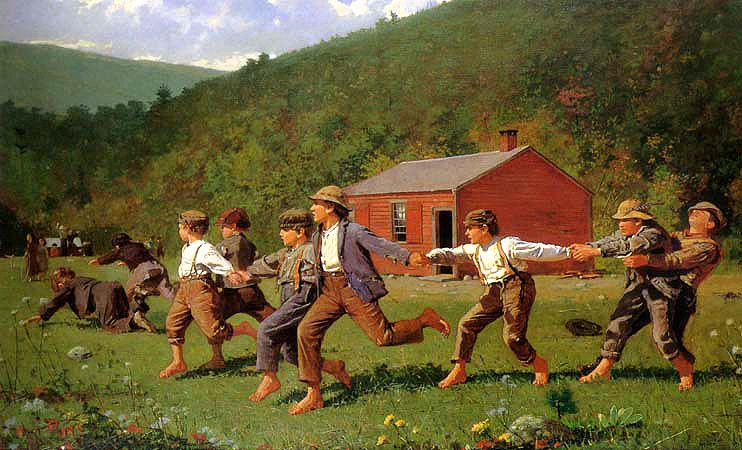
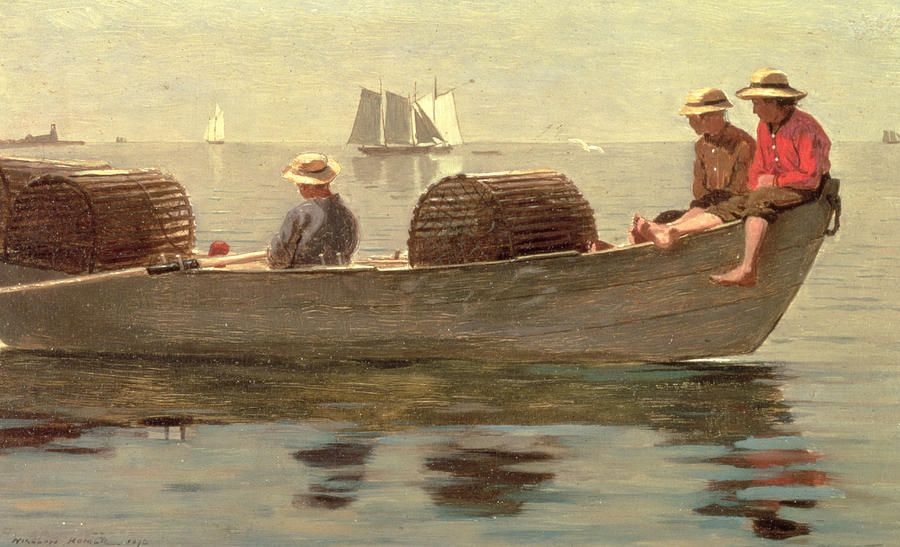
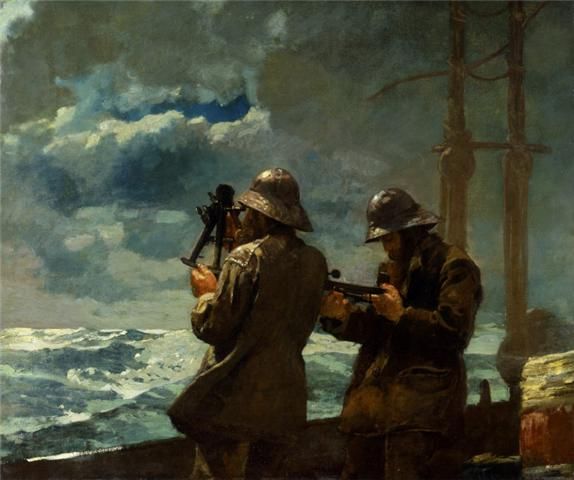
WINSLOW HOMER (1836-1910), AMERICA'S GREATEST 19TH CENTURY PAINTER?

Upon learning to know the work of Winslow Homer, I could easily understand why he is considered by many the greatest American painter of the nineteenth century. As I am always short on time, I'll try to keep it brief re what you ought to know about this remarkable artist.

50's, meant is of course the 1850's. Started as a commercial printmaker in Boston and NY, briefly studying oil painting in the spring of 1861.

1860's: was sent to the front as an illustrator/correspondent for Harper's Weekly. The second half of the decade, and basically the entire next one, saw Homer developing his art, and were characterized by artistic experimentation and a preference for incorporating nature and especially natural light in his works. Many of his subjects in this period he found at seaside resorts in MA and NJ, although he also frequented the Adirondacks and the White Mountains. It should be noted however that although he began to establish his reputation as a painter in this timeframe, for most of the time in the 60s and 70s he still needed the design of magazine illustrations as a source of income.

After a brief stint in the early eighties in Cullercoats, a village in northern England, where he was impressed by the strenuous lives led by the fishermen and their womenfolk, he settled for good in Prout's Neck, Maine, where he lived and worked until his death, notwithstanding journeys to the Caribbean. His major works from then on would focus on the struggle of Man against the (marine) elements, and, going beyond that, on the naked force of nature, of the Sea, itself.

I chose three works to get you acquainted with Winslow Homer:


 photo snap_the_whip_homer_zps2bab8c06.jpg


Snap the whip.


 photo three-boys-in-a-dory-winslow-homer_zpsd9fcb908.jpg


Three boys in a dory. Flirting with impressionism here.


 photo EightBellsWinslowHomer_zpsd4ccb351.jpg


Eight bells. My personal favorite. In this magnificent shot - can I call it a shot, Winslow? - the painter captures the fight - and mastery - of man vs. Nature, the raw beauty of the wild sea, and the quality of Light illuminating it all. Brilliant!


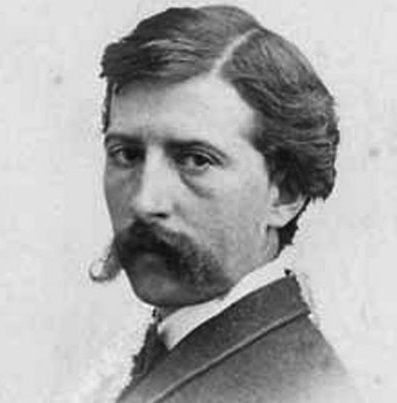
Hail to the artist, a...


 photo winslow-homer_zpsa36ceedb.jpg


...Dead White Male.


MFBB.

Wednesday, April 11, 2012

PROFESSOR SIR LEONARD BAIRSTOW, CBE, FRS, FRAeS (1880 – 1963).

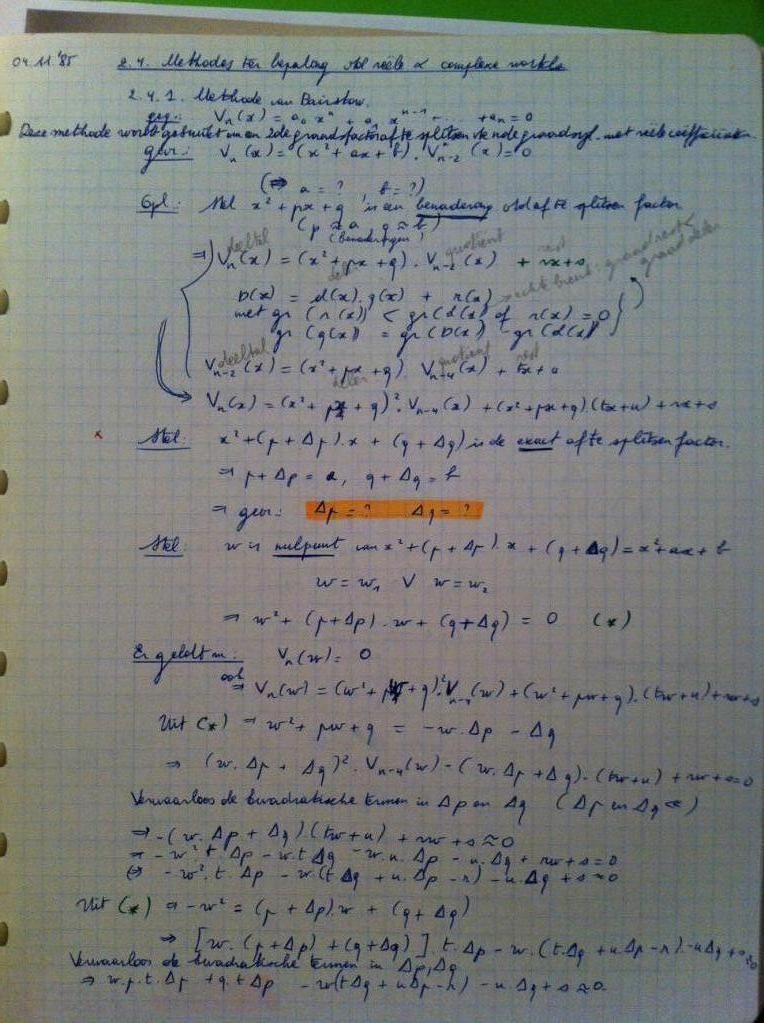
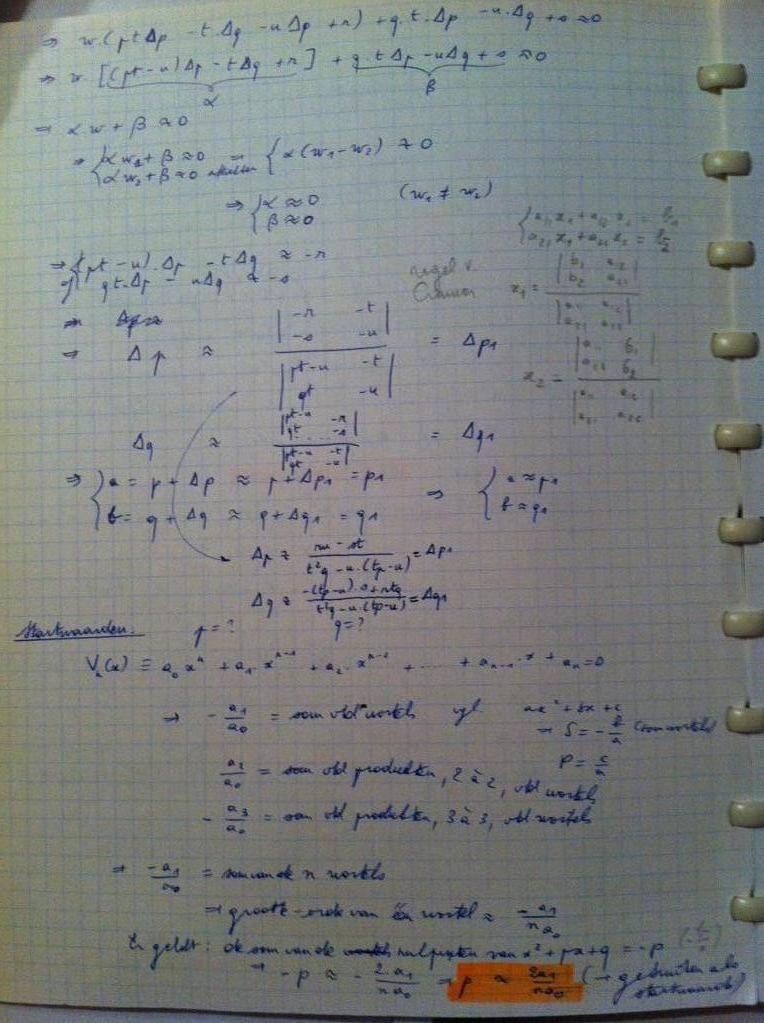
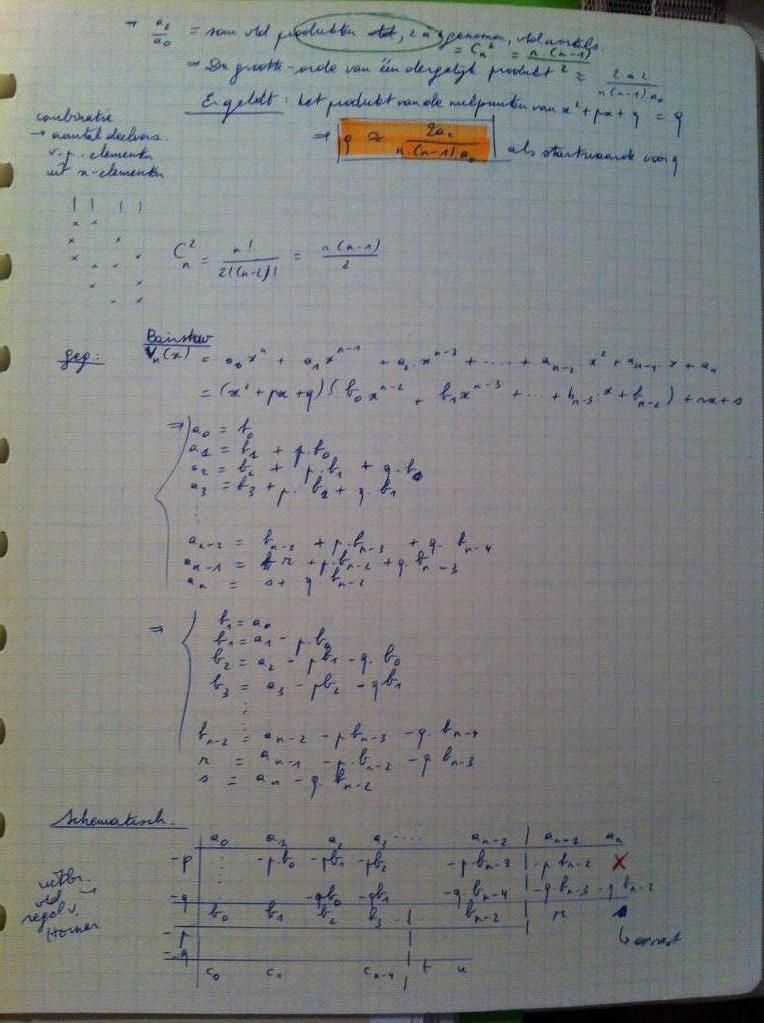
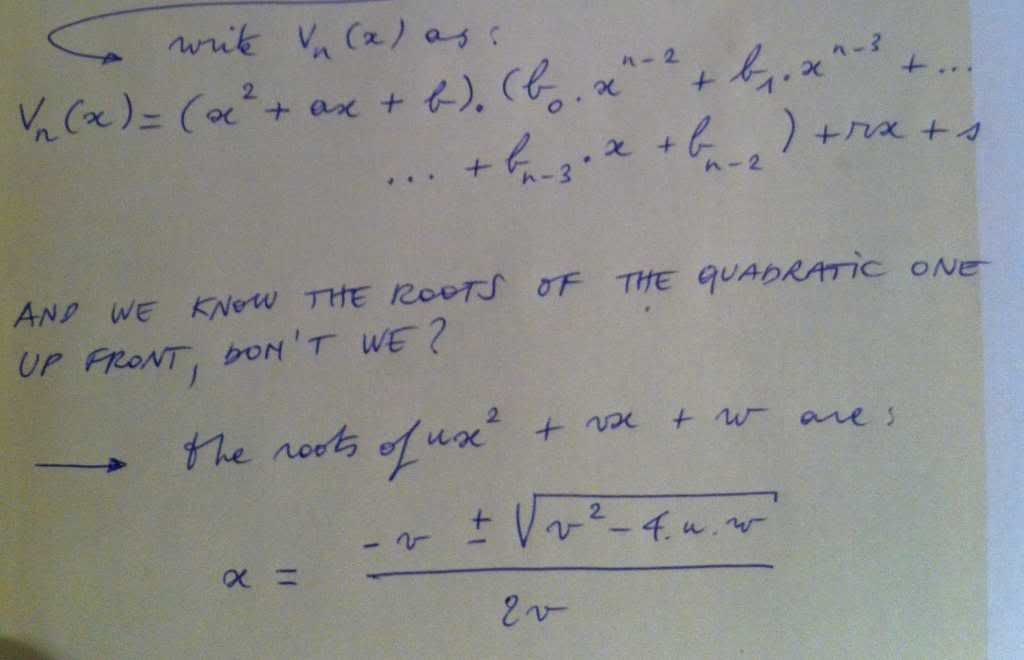
Years ago, when I was an engineering student in Ghent, one of my favourite courses was numerical analysis. One of the first calculation and iterative methods the course covered was the Bairstow Method, named after Sir Leonard Bairstow, used to calculate the roots of a polynomial equation. Real genius often manifests itself in simple solutions, and Bairstow demonstrated this by a method which enabled to simply detach a quadratic equation off the polynomial equation! Since the roots of a quadratic equation are very simply determined, one had at the same time two roots of the larger equation, since the polynomial equation could be written as the product of the quadratic one and a polynomial one of two degrees less. So, if you put in a root of the quadratic equation, it yielded zero, but at the same time so did the product of the two equations so the roots of the quadratic one were at the same time the roots of the initial polynomial one!

It is with love that this evening, I pored once again over the notes detailing with Bairstow's Method. It looks so beautiful, I thought I wanted so share 'em, so here they are: math archaeology from the eighties:


Photobucket


Photobucket


Photobucket


Let me clarify; DON'T - RUN - AWAY!!!


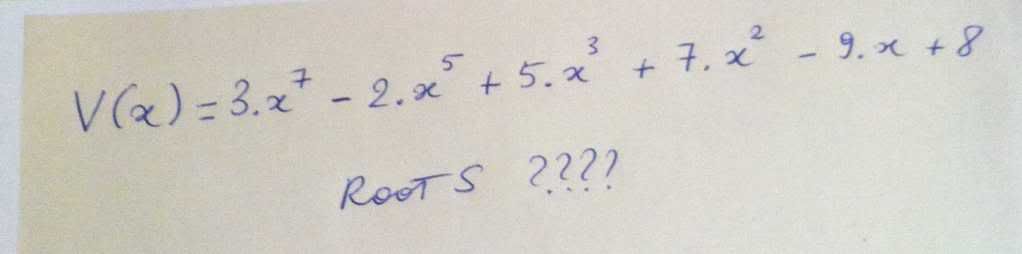
First off, wanna see a run of the mill polynomial equation? Here it is:


Photobucket


Symbolically, with variables substituting for the distinct numbers above, we could write the above equation as (see the notation Vn(x) = ....):


Photobucket


Now, as I wrote earlier, Bairstow figured that if he could just split off a quadratic equation off the bigger polynomial, and write both as a product, it would merely suffice to find the roots for the quadratic. And THAT is easy of course, in all likelihood most of you must have come across that stuff already in your third year High School:


Photobucket


FYI, this knowledge goes back as far as 628AD, when the Indian mathematician Brahmagupta literally described the above formula.


I consider myself lucky to have had to study numerical analysis - amongst others. If your kid has a knack for math, you might want to steer him/her into a direction in which he/she will at some point come across Bairstow and Co. Mathematics is sheer beauty. Oh, you might even give them a nod if they DON'T have that knack - I certainly didn't, but I chewed myself a way thru it and feel a better and richer person because of it.


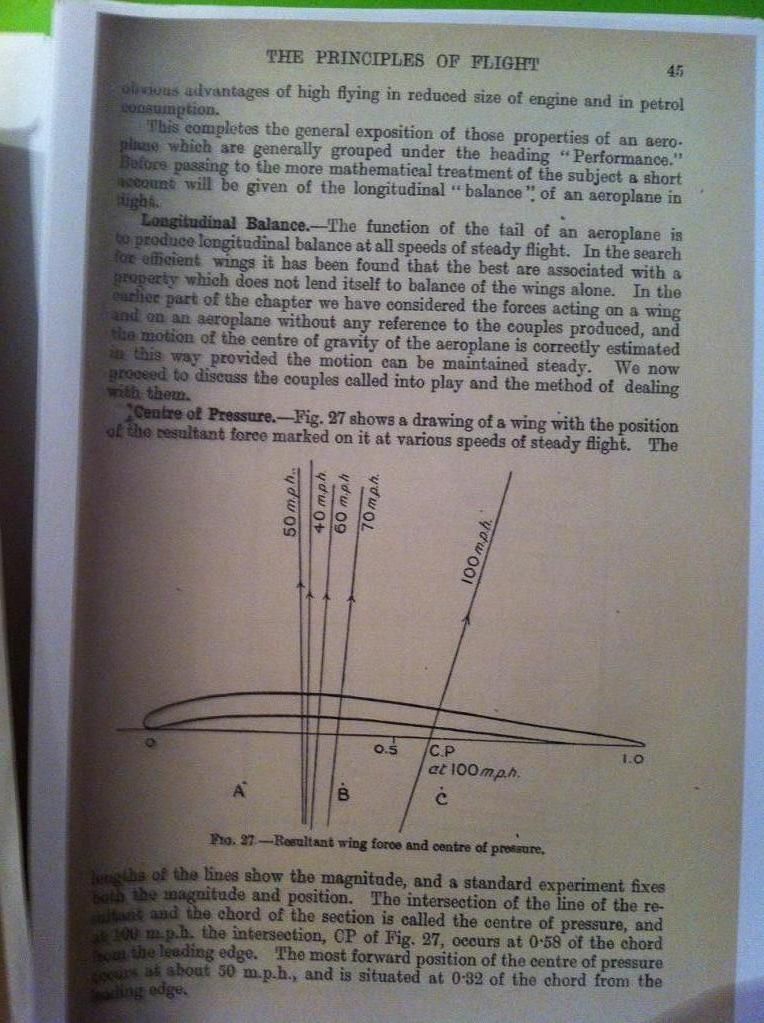
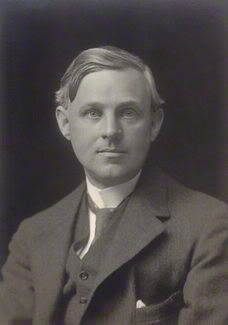
Sir Leonard Bairstow, CBE, FRS, FRAeS (1880 – 1963), a Halifax, UK native, not only distinguished himself as a keen mathematician. Post secondary school, a scholarship secured him a place at the Royal College of Science, and once there, a Whitworth Scholarship helped him to do research into the explosion of gases. From there, he went to the National Physical Laboratory at Bushy Park where in time he became Head of aeroplane research work, holding the Zaharoff Chair of Aviation at Imperial College from 1920-1949 and becoming Professor Sir Leonard Bairstow. At some point, he also became a member of the Royal Society of London and the Royal Aeronautical Society. While Bairstow the Mathematician established his fame with the method named after him, see above, Bairstow the Aeronatical Engineer became incontournable with his groundbreaking work Applied Aerodynamics (1920). You can download it for free, as I did (it is now a prized possession in my library), and it makes for good, if a trifle difficult reading. Good, that is, if you are an aviation enthusiast. Anyway, Applied Aerodynamics's importance at the time was so profound that it was 'field-used' into World War II and its principles hold firmly today. Below you see a pic I took of a page at random. It deals with the longitudinal balance of a plane which is determined by the couples working around its center of gravity. One of those forces is, of course, the lift produced by the speed of the aircraft. The figure shows the resultant wing force and its centre of pressure on a wing section at various speeds:


Photobucket


Back in those days, a work like Bairstow's was sorely needed. Without sound theoretical treatises or sufficient empirical knowledge (I'm not sure there were wind tunnels at all in the early twenties) aerodynamics was very much a business of trial and error. Test pilots paid with their lives for this, like e.g. the crew of the ill-fated Tarrant Tabor which crashed just when lifting off for its maiden flight from Farnborough on May 26, 1919:


Photobucket


On that day, pilot and co-pilot Captains F.G. Dunn and P.T. Rawlings, after taxying, launched Tabor F 1765, a design meant to bomb Berlin from the UK, with only the lower four engines (which were in a push pull configuration) at full throttle. At some point they also engaged the two upper engines - also at full power. You do not have to be Bairstow - you do not even have to be an aeronautical engineer - to understand what happened next. The sudden extra power of two engines placed that high above the fuselage lifted by their sheer torque the tail section up... and the nose section down. The Tabor, having just lifted off, crashed with its nose into the ground instantly killing Dunn and Rawlings.

I'm pretty sure Prof Bairstow must have been well informed about the disaster. And I'm also pretty sure that if HE had been involved in the design of the plane, he would have foreseen what happened. But it was not to be like that, and again a blood price was paid.

Bairstow himself passed away in 1963.

His research did not.


Photobucket


Dead White Male.


MFBB.

Thursday, April 28, 2011

FRANZ PETER SCHUBERT: ELLENS DRITTER GESANG.

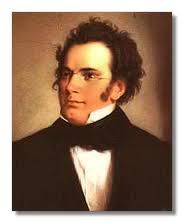
In 1825 Franz Schubert wrote his Opus 52, which contains seven songs inspired by Walter Scott's epic poem The Lady of the Lake, and which was translated into German by Adam Storck. Over time, the popular misconception has arisen that this is a purely religious song, and as such it has become known as Schubert's Ave Maria. In reality he labeled it Ellens dritter Gesang, Ellen's third song, and although it indeed begins with Ave Maria, and is dedicated to the Holy Virgin, its context is more worldly, describing the 'Lady of the Lake', Ellen Douglas, calling from a cave in the Scottish Highlands upon the Virgin Mary to help her and her exiled father.


In 1999, my wife and I asked the priest to play this during our Wedding Mass.


Read more about Schubert here.


Photobucket


Dead White Male.


MFBB.

Tuesday, April 12, 2011

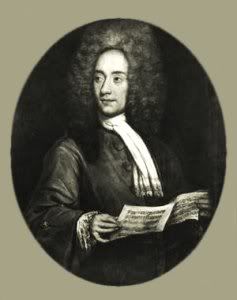
TOMASO GIOVANNI ALBINONI: ADAGIO IN G MINOR.

From Tomaso Albinoni, famous Venetian Baroque composer much admired by Johann Sebastian Bach.


Photobucket


There is some ambiguity with regards to the authorship of this piece, since its composer was actually the 20th century Italian musicologist Remo Giazotto. He claimed however that it was based on a sonata by Albinoni, which he found right at the end of WWII in the archives of the Saxon State Library.

Whoever owns the most credit, this is a magnificent piece by a...

... Dead White Male.


MFBB.

Thursday, February 17, 2011

JOHN SINGER SARGENT (1856-1925).

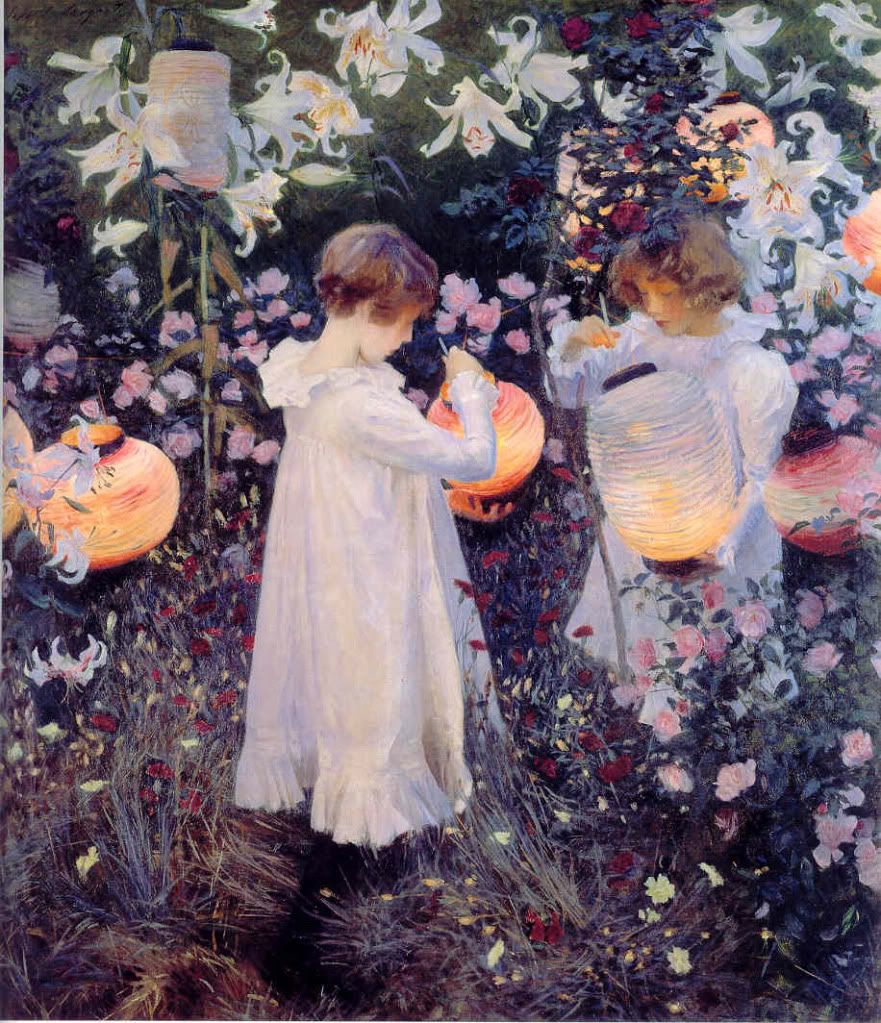
Not much time. What follows are three works by an American painter I admire very much, John Singer Sargent. I say "American" painter, since to the best of my knowledge he had an American passport, being the son of an American couple, but I'm inclined to think he thought of himself more as a European. After the death of a sister born earlier, his mother was so distraught that she somehow convinced his father to give up his job as an eye surgeon at the famous Wills Eye Hospital in Philadelphia, PA, and adopt an almost nomadic lifestyle throughout Europe. It is there that John was born, in Florence in 1856, and it was also there that he died, in London in 1925. You should discover Sargent. He crafted around 900 oil paintings and some 2,000 watercolors - there's an ocean of beauty to be discovered there.


First Carnation, Lily, Lily, Rose. 1885.


Photobucket


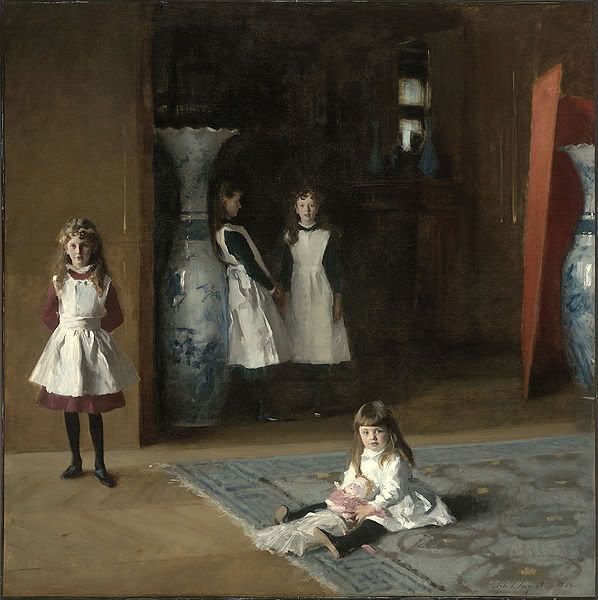
Then The Daughters of Edward Darley Boit (1882).


Photobucket


At some point, Sargent became very enamored with all things Spanish. This painting, the psychological aspects of which deserve closer scrutiny, owed much to a Velazquez painting - at least with regards to composition. The beautiful Japanese vases still exist and have even been donated by heirs of the Boit family to the Museum of Fine Arts in Boston, MA. There they flank this painting, which in 1919 was donated to the museum by the four siblings depicted.

None of these girls would ever marry and they would live lonely lives, with only the two youngest ones, those in the foreground, keeping contact with each other. The two oldest would as adults suffer from debilitating mental illnesses. The names of the girls are Mary Louisa, Julia Overing, Jane Hubbard, and Florence.

It is... as if Sargent has painted here a foreshadowing of these lovely girls' fates. Notice how the older girls seem to be withdrawing already in darkness.

Sad. If it's any consolation for the girls' souls - Sargent has made them immortal.


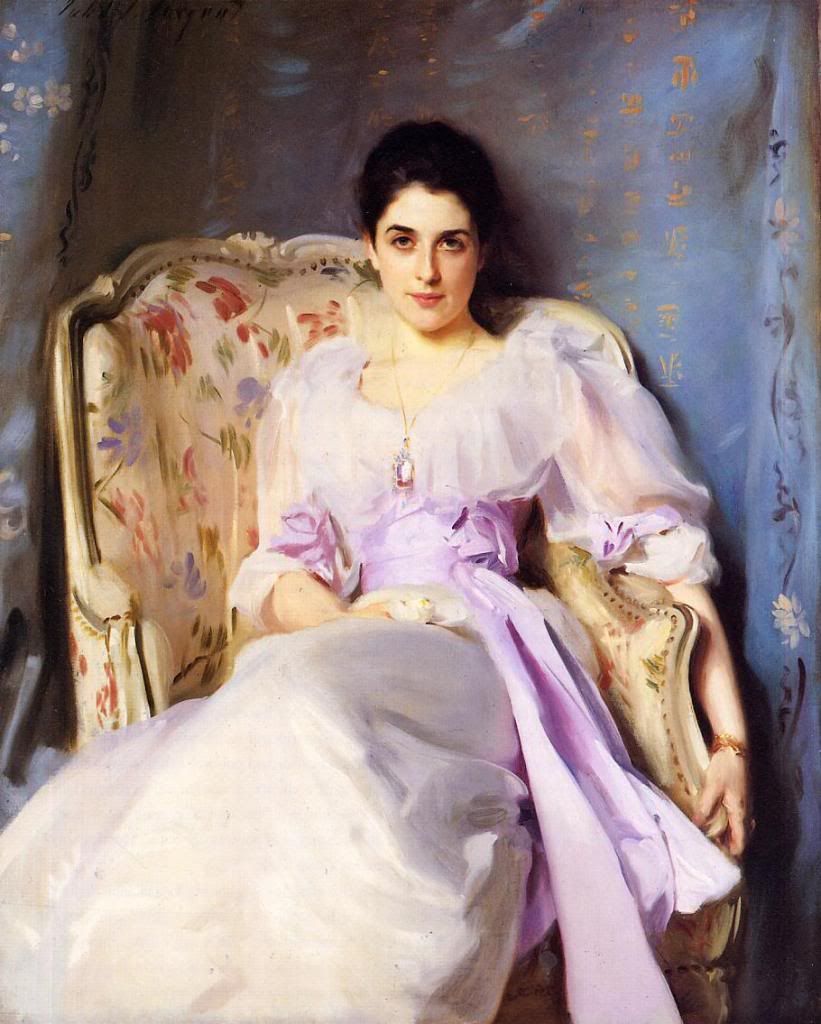
I suppose this is my favourite. Lady Agnew of Lochnaw. Painted in 1892 and 1893.


Photobucket


Classy Lady. Somehow Sargent has captured here sensuality without the slightest hint of eroticism.


Enjoy, nite. Oh yeah...


... Dead White Male.


MFBB.

Monday, January 10, 2011

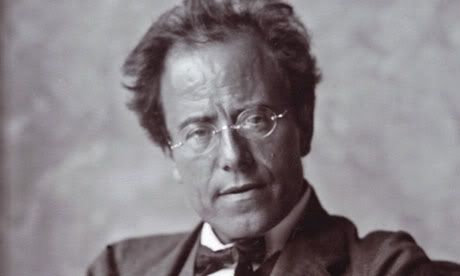
GUSTAV MAHLER'S ADAGIETTO, FIFTH SYMPHONY.

Mahler's well-known Adagietto from his Fifth Symphony. There's several speeds at which to play it, and they are basically open to the conductor's taste, since Mahler did not provide metronome marks. Well, when you listen to it, it's actually difficult to imagine the Adagietto's tempo being dictated by a metronome. When Mahler himself conducted it in 1905, it lasted about nine minutes - since the master himself will have known best I guess every performance should last about this long.


At 7:46 this comes close to the Bruno Walter timing, who was otherwise a conductor quite well 'feeling' Mahler. My personal taste goes out to a performance in a clip from the 1971 movie Death in Venice, and that lasts about 9 minutes. Now that one is absolutely wonderful. I consider it definitely better than the version above, but I wasn't able to find it tonight. Perhaps it's better so, since the clip is somewhat controversial, and my feelings about that movie are a bit ambiguous. Death in Venice has been lauded by most culture popes to such an extent that it's almost impossible to hint you don't feel too comfortable with the homoerotic/pederastic nature of the movie. Our moral bettes will inevitably come up with something like that it's a movie about the discovery of beauty, regret about beautiful things forever gone and the like. I don't know. Perhaps I should see it once in whole and then judge.

Anyway... yes, the Adagietto has been commercialized thru and thru. You will find it on a gazillion "Most beautiful classical melodies EVAH" and so on. Still, that does not detract from it's heartbreaking beauty. Enjoy it. And thank you, Gustav Mahler.


Photobucket


Dead White Male.


MFBB.

Wednesday, December 22, 2010

LUDWIG VAN BEETHOVEN: MOONLIGHT SONATA.

Delicate beauty.


One of several piano sonatas, the Mondscheinsonate, dedicated to one of Beethoven's numerous botched romances, Countess Giulietta Guicciardi. It's not so much that she turned him down, rather, one of her parents, possibly her father, forbade her to marry the then thirty year old piano virtuoso.

All in all a rather tragic life, actually. Despite this, a prodigious if intermittent output.


Dead White Male.


MFBB.

Thursday, December 09, 2010

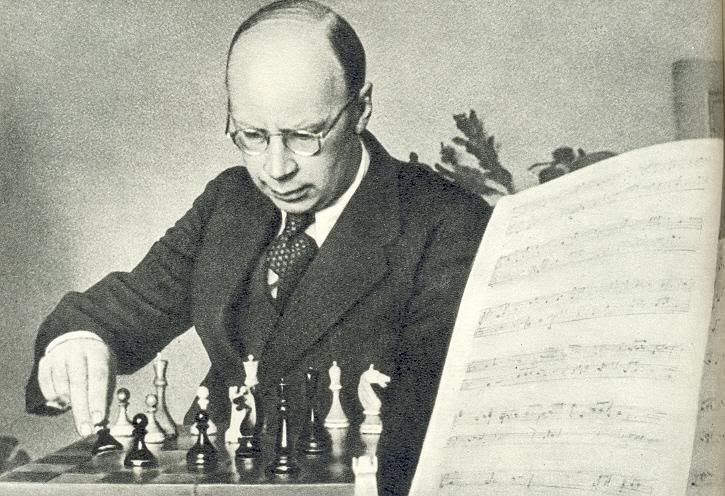
SERGEI PROKOFIEV'S MONTAGUES AND CAPULETS.

Probably the best known score of Prokofiev's ballet Romeo and Juliet is the one known as Montagues and Capulets. It is the fifth score in Scene II, Act I of the ballet (which is composed of three acts in all). It is perhaps better known as the Dance of the Knights. The following video shows a performance in the Opéra National de Paris.


Magnificent.


Sergei Prokofiev (1891-1953) was one of those rare individuals who, by sheer talent, managed to evade the plight and the mayhem of the overwhelming majority of Russians in the communist era. To be sure, he had his share of worries - the producer of his first Opera for a by then firmly established USSR, was shot by the NKVD, and he himself was forced to compose a cantata hailing Stalin - but taking it all together he coasted relatively unscathed thru three decades of massive suffering for the ordinary folk in the Soviet Union. Luckily so, otherwise the world would never have known his Romeo and Juliet, Peter and the Wolf, Alexander Nevsky or Scythian Suite. He died on the very same day as Stalin, 5 March 1953, and the mass murderer's farewell gesture was a so excessive demand of genuine flowers that poor old Prokofiev's funeral had to make do with paper flowers.


Photobucket


Dead White Male.


MFBB.